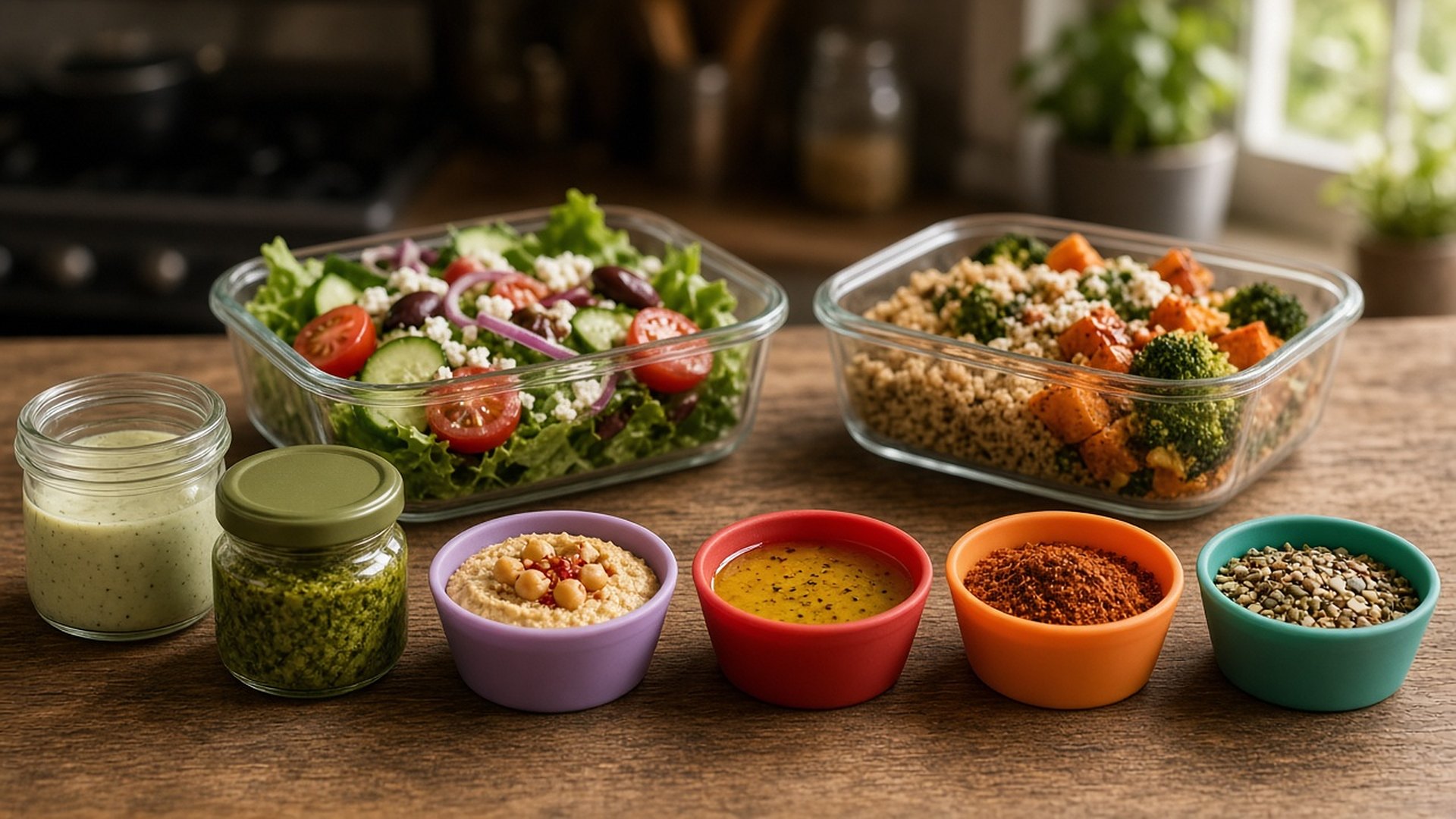
Sauce and Dressing Containers for Meal Prep: Dressing Separate, Food Crisp
Mini containers are the underrated heroes of cooking ahead. With them, salad stays crisp, bowls stay fresh and your bag stays dry.
Disclosure: This article contains affiliate links. If you buy through them, we earn a commission – the price stays the same for you.
The most common reason for soggy meal prep isn't the container – it's the dressing. If it goes over the salad in the morning, there's no crunch left by noon. The same goes for sauce over crispy tofu, croutons in soup or nuts in yogurt. The solution is surprisingly small: a few mini containers in which everything wet and everything crunchy travels separately.
Sounds like small stuff, but it makes a huge difference. With three or four good little containers, Thursday's box tastes almost freshly made.
What belongs in its own container?
| Category | Examples | Container | Approx. size |
|---|---|---|---|
| Dressings & vinaigrettes | oil and vinegar, honey mustard, lemon | leakproof with seal | 2–3 oz (50–80 ml) |
| Creamy dips | hummus, tzatziki, yogurt dip | wide opening, screw or snap lid | 3–5 oz (80–150 ml) |
| Sauces | teriyaki, peanut sauce, pesto | tight, odor-neutral (glass/stainless steel) | 2–3 oz (50–100 ml) |
| Crunchy toppings | nuts, seeds, croutons, crispy fried onions | dry, doesn't need to be leakproof | 2–3 oz (50–100 ml) |
| Spices & herbs | chili flakes, sesame, spice blend | mini jar or shaker | 1–2 oz (20–50 ml) |
Material: plastic, silicone, glass or stainless steel?
- Plastic (PP): light, cheap, often in multi-packs. Can stain and absorb odors with curry, turmeric or tomato.
- Silicone: flexible, easy to empty, often with a tight lid. Some silicone parts absorb odors – rinse well before first use.
- Glass: odor- and taste-neutral, ideal for pesto, garlic dips and vinegar. Heavier, breakable. Mini mason jars are a classic.
- Stainless steel: sturdy, neutral, pairs well with bento and stainless steel lunchboxes. Usually pricier, not microwave-safe.
For your backpack, the seal matters most. A silicone ring in the lid or a screw top is a must for liquid dressings. Clip lids without a seal are only good for dry things or thick dips.
Leakproof isn't always leakproof
Even good containers sometimes leak. The most common causes:
- Too full: leave a little air under the lid, otherwise liquid squeezes out when you close it.
- Oil on the rim: an oily rim breaks the seal. Wipe briefly, then close.
- Carried on its side: stand containers upright in the lunchbox – or put a small bag around them.
- Seal not seated properly: after washing, check that the ring sits cleanly in its groove.
- Heat: warm sauces expand and push. Let them cool first, then close.
Five combinations for the week
- Greek salad: lettuce and vegetables in the container, feta and olives on top, lemon oregano dressing separate.
- Asian bowl: rice, vegetables, tofu in the container. Peanut sauce in a small jar, sesame and chili flakes in a mini container.
- Grain bowl: bulgur or quinoa with roasted vegetables, hummus in the dip container, seeds extra.
- Soup in an insulated jar: croutons and fresh herbs separate – see insulated food jar for lunch.
- Yogurt breakfast: yogurt and fruit in the container, granola and nuts in a dry container so they stay crunchy.
Make a stash: dressings for the whole week
Many dressings can be mixed in a larger jar for several days: a simple vinaigrette of oil, vinegar, mustard, salt and a little honey usually keeps several days in the fridge. Dips with yogurt, fresh garlic or herbs are more delicate – plan for two to three days. Each morning, just fill the day's portion. And don't forget: one tablespoon of oil has around 120 calories – if you watch your energy balance, a small container is a natural portion limit (more in meal prep for weight loss).
Cleaning
Small containers have tight corners and seals where oil residue collects. Remove sealing rings regularly and wash separately; a small bottle or straw brush helps. Garlic or curry odors can often be reduced with warm water and baking soda or a day in the air – or just use glass for strong flavors.
Our picks
We link to Amazon search results instead of individual products – that way you see current prices, sizes and reviews and choose for yourself. Prices and availability may change.
- Leakproof dressing containers approx. 2–3 oz (50–80 ml), with seal
For vinaigrettes and liquid sauces in your backpack.
- Mini mason jars glass, screw lid, approx. 2–4 oz (50–100 ml)
Odor-neutral for pesto, garlic dips and vinegar.
- Stainless steel dip containers with silicone lid, often in a set
Sturdy and neutral – a match for bento and stainless steel boxes.
FAQ
Why should I pack dressing separately?
Acid and salt draw water out of salad and vegetables. If the dressing only goes on when you eat, everything stays crisp.
What size should sauce containers be?
For one portion of dressing, 2–3 oz (50–80 ml) is usually enough; for dips like hummus, more like 3–5 oz (80–150 ml).
Which material is best for garlic or curry sauces?
Glass or stainless steel, because they don't absorb odors or stains.
Why does my dressing container leak?
Usually it's too full, the rim is oily or the seal isn't seated properly. Carrying it upright also helps.
How long do homemade dressings keep?
Simple vinaigrettes often several days in the fridge; yogurt and garlic dips more like two to three days.
Keep reading
- Lunchbox mistakes that make food soggy
- Insulated food jar for lunch: hot food without a microwave
- 5 meal prep containers compared (glass vs. plastic)
Disclosure / affiliate: This article contains affiliate links. As an Amazon Associate we earn from qualifying purchases. The price you pay stays the same. Assessments are based on manufacturer specs and everyday use (as of October 2026).