Meal Prep for Weight Loss: Plan Portions Without Calorie Stress
Cooking ahead takes the decision out of the hungry moment. Here's how to build filling containers, portion sensibly and stick with it – no crash diet.
Disclosure: This article contains affiliate links. If you buy through them, we earn a commission – the price stays the same for you.
Note: This article does not replace advice from a doctor or registered dietitian. If you have pre-existing conditions, take medication, are pregnant or want to lose a lot of weight, talk to your doctor or a dietitian first.
Most weight loss plans don't fail because of knowledge – they fail on Tuesday at 1 p.m. You're hungry, you have no time, and the closest option is the bakery or the cafeteria burger. Meal prep moves the decision to a calm moment: on Sunday, full and with a plan, you decide what goes on your plate during the week. It's not a magic trick, but a pretty effective lever.
Important up front: weight loss works through a moderate, sustained energy balance – not through individual "fat-burning foods". Meal prep makes it easier to keep that balance because portion sizes and ingredients are fixed.
The container formula: half, quarter, quarter
Instead of counting every calorie, a simple formula helps – one that also shows up in many nutrition guidelines (like MyPlate):
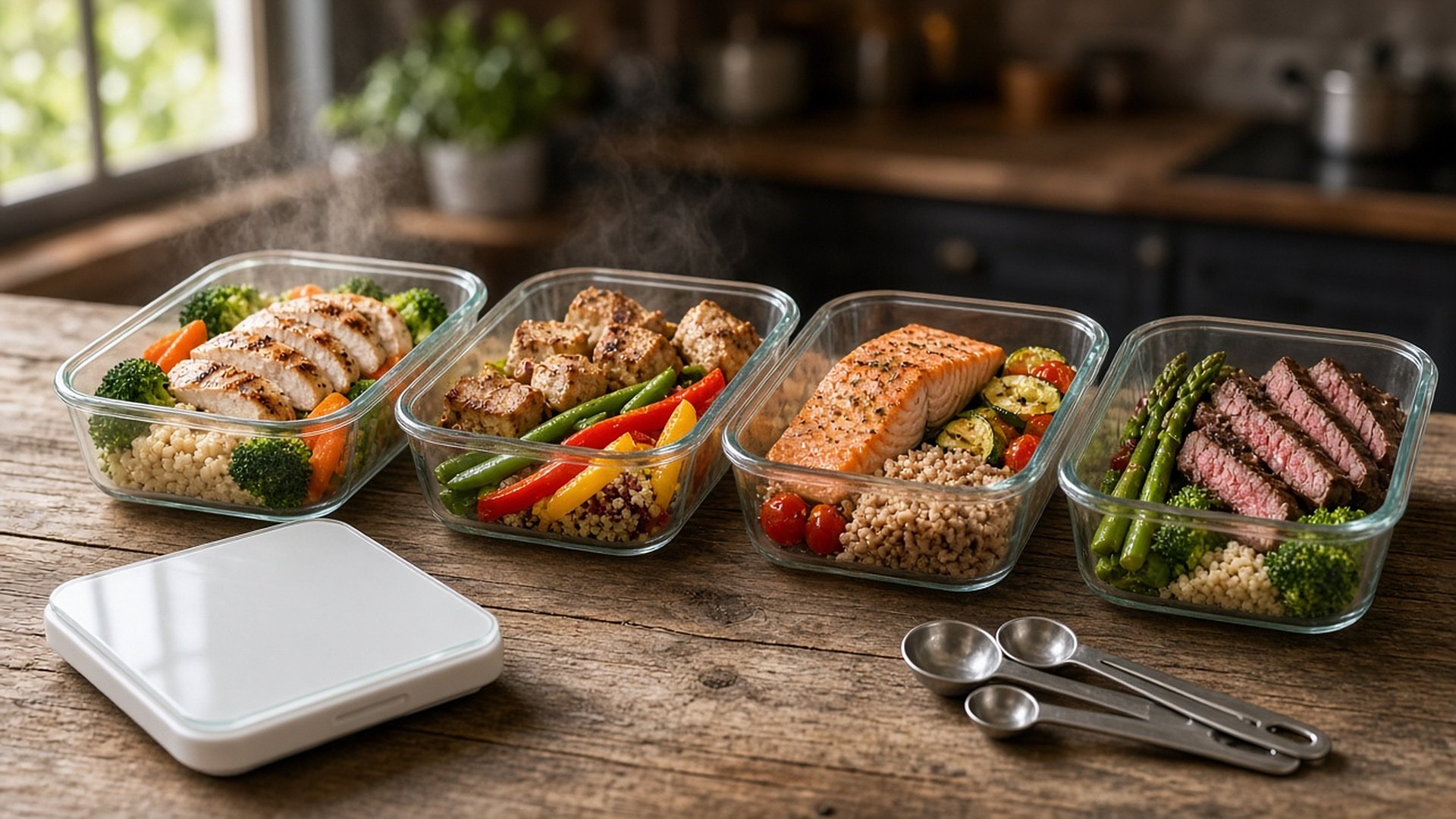
- Half vegetables or salad: lots of volume, little energy, fills you up through fiber and water. Roasted vegetables, broccoli, bell peppers, zucchini, green beans.
- A quarter protein: chicken, turkey, fish, eggs, tofu, tempeh, lentils, chickpeas, Greek yogurt or cottage cheese. Protein is filling and helps preserve muscle while losing weight.
- A quarter filling side: brown rice, quinoa, potatoes, whole-wheat pasta, bulgur. Don't skip it – otherwise cravings hit in the afternoon.
- Fat and sauce, mindfully: one tablespoon of oil quickly adds around 120 calories. Pack dressing separately and dose it.
Containers with two or three compartments make the formula visible. And because all containers are the same size, there's no "accidentally bigger" portion.
Estimating portions
A kitchen scale is worth its weight in gold at the start – not forever, but to get a feel. How much is 5 oz of chicken? What does ⅓ cup of uncooked rice look like cooked? After a week or two you'll recognize it at a glance. Which scale works is covered in kitchen scale: analog vs. digital.
| Component | Guideline per lunch container | Everyday measure |
|---|---|---|
| Vegetables | approx. 7–10 oz (200–300 g) | two handfuls |
| Protein (meat/fish/tofu) | approx. 3½–5 oz (100–150 g) | about palm-sized |
| Legumes (cooked) | approx. 4–6 oz (120–180 g) | a well-filled hand |
| Rice/pasta (uncooked) | approx. ¼–⅓ cup (50–70 g) | a fist cooked |
| Oil/dressing | approx. 1 tbsp | thumb-sized |
Guidelines for adults, not individual advice. Needs depend on height, weight, age and activity.
Five containers that keep you full
- Chicken veggie bowl: chicken strips, roasted broccoli, bell pepper, brown rice, yogurt herb dip on the side.
- Salmon with roasted vegetables: salmon fillet, zucchini, cherry tomatoes, quinoa, lemon wedge.
- Lentil dal: red lentils with tomato and spinach, a small portion of basmati. Freezes great.
- Beef and bean skillet: lean ground beef or strips, green beans, bell pepper, diced potatoes.
- Tofu teriyaki: pan-fried tofu, broccoli, carrots, whole-wheat noodles, sauce used sparingly.
Tip: plan two main dishes and alternate instead of eating the same thing five times. Boredom is an underrated reason why plans fall apart. How to prep everything in one go is shown in the Sunday prep checklist.
Prep your snacks too
The afternoon is often the real trap. If you prep snacks too, you'll reach for the vending machine chocolate less often: veggie sticks with hummus, Greek yogurt with berries, an egg, an apple with a few nuts. Small containers with lids make them portion-friendly – see spice and sauce containers.
Common mistakes
- Eating too little: mini portions almost always lead to cravings in the evening. Better enough vegetables and protein.
- Underestimating sauce: store-bought sauces and lots of oil quickly turn a light container into a heavy one.
- Everything fat-free: some fat belongs in there – it adds flavor and helps absorb fat-soluble vitamins.
- Starting too ambitious: five days, three meals, everything new – hardly anyone keeps that up. Start with lunches on three days.
- Only watching the scale: body weight fluctuates from day to day. Look at the trend over weeks.
Our picks
We link to Amazon search results instead of individual products – that way you see current prices, sizes and reviews and choose for yourself. Prices and availability may change.
- Containers with compartments glass or plastic, 2–3 compartments
Make the half-quarter-quarter formula visible and portions the same size.
- Digital kitchen scale 1 g steps, tare function
For the first weeks, to get a feel for portion sizes.
- Measuring spoon set tablespoon, teaspoon, fractions
So oil, nut butter and dressing don't land in the container "by feel".
FAQ
Does meal prep help with weight loss?
It can help, because portions and ingredients are set in advance and spontaneous, energy-dense decisions become less frequent. Weight loss itself depends on your energy balance over a longer period.
Do I have to count calories when meal prepping?
Not necessarily. A fixed container formula – half vegetables, a quarter protein, a quarter side – and same-size containers work well for many people.
How much protein goes into a meal prep container?
As a guideline, about 3½–5 oz (100–150 g) of meat, fish or tofu, or a well-filled handful of cooked legumes. Individual needs vary.
Should I cut out carbs?
For most people that's not necessary. A moderate portion of filling sides like brown rice or potatoes prevents cravings.
How long do the containers keep?
Usually three to four days in the fridge. Freeze the rest of the week.
Keep reading
- Kitchen scale: analog vs. digital for prep
- Budget meal prep: under $30 a week
- Sunday prep in 90 minutes – checklist
Disclosure / affiliate: This article contains affiliate links. As an Amazon Associate we earn from qualifying purchases. The price you pay stays the same. Assessments are based on manufacturer specs and everyday use (as of October 2026).