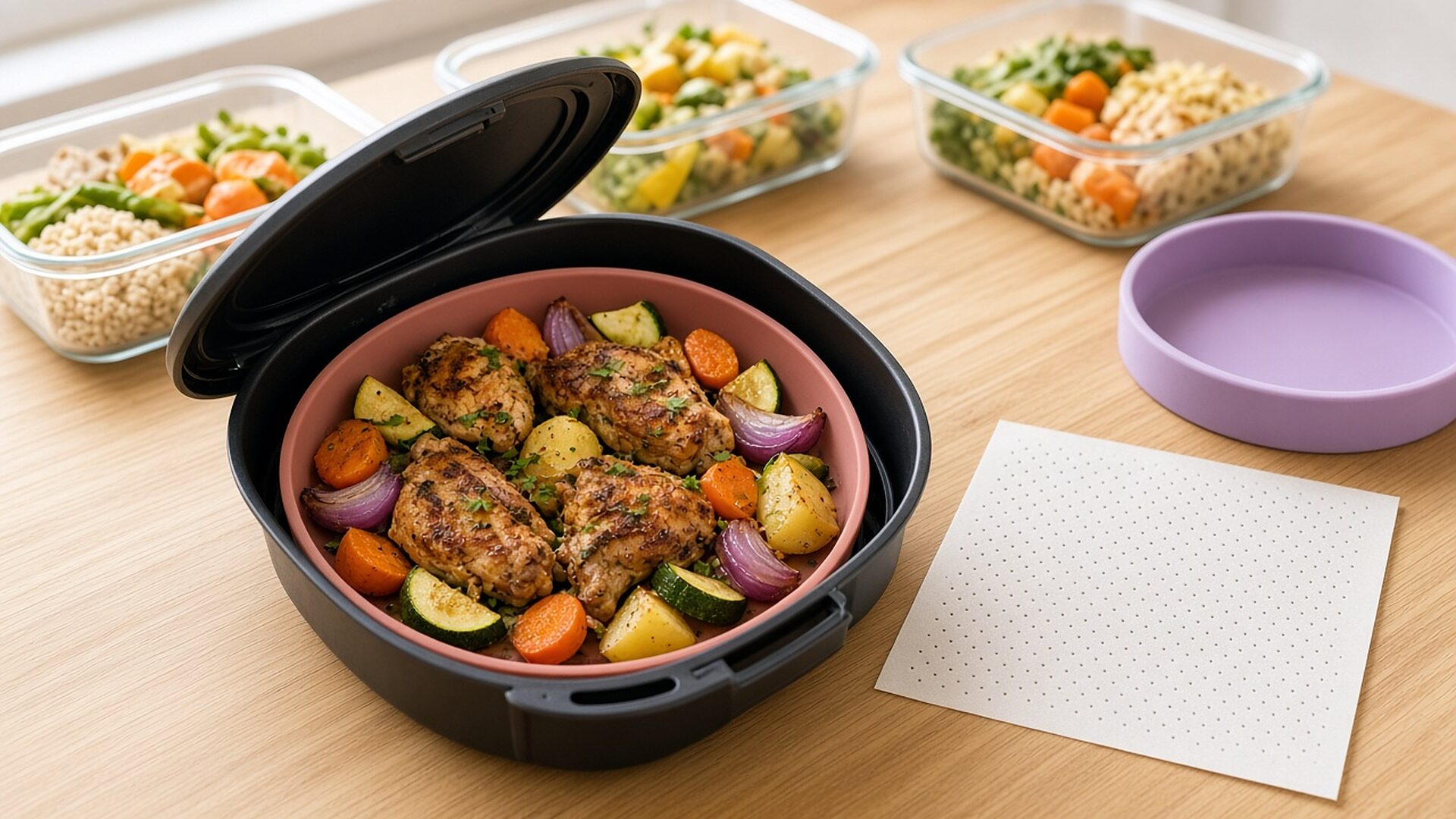
Air Fryer Silicone Liner or Parchment Paper? What Really Works Better for Meal Prep
Silicone liner, regular parchment or perforated air fryer paper? In short: all three have their place. Here's when each makes sense – and where you can skip the purchase.
Disclosure: This article contains affiliate links. If you buy through them, we earn a commission – the price stays the same for you.
If you meal prep in the air fryer, you know the drill: after teriyaki chicken the basket is sticky and burnt marinade sits between the grates. That's where silicone liners and parchment come in. Both protect the basket – but they also change how the hot air reaches the food. And you'll notice it in the result.
We compare them in practical terms: what gets crispier, what's faster to clean, what pays off over time? No lab tests – just manufacturer specs and what works for weekly meal prep. If you don't have an air fryer yet, first read what size air fryer you need for meal prep.
Quick comparison
| Criterion | Silicone liner | Parchment (perforated) | Directly in the basket |
|---|---|---|---|
| Crispiness | medium (bottom stays softer) | good | best |
| Sauces & marinades | very good, nothing drips | okay, can get soggy | poor, basket gets sticky |
| Eggs, casseroles, batter | very good | not suitable | not suitable |
| Cleaning | dishwasher, greasy film possible | throw away | scrub the basket |
| Long-term cost | one-time approx. $10–20 | ongoing, approx. $5–10 per 100 sheets | nothing extra |
| Sustainability | lasts for years | single-use | – |
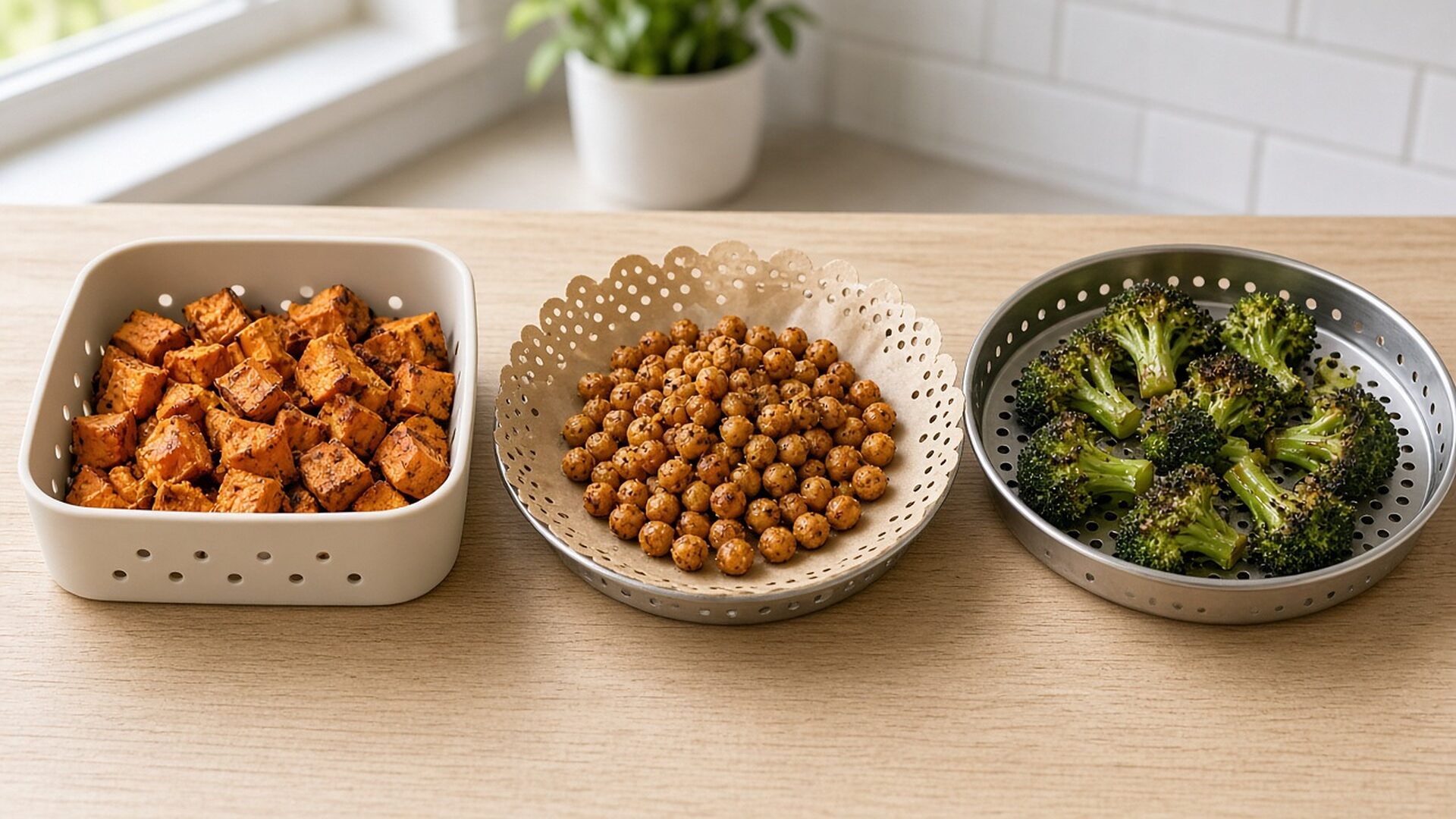
| Best for | saucy prep, egg bites, glazed salmon | vegetables, potatoes, tofu | wedges, chickpeas, re-crisping leftovers |
Prices are rough retail guidelines as of October 2026.
When the silicone liner wins
Silicone liners are basically small heat-proof bowls that fit right into the basket. Their big advantage: liquids stay inside. For meal prep that means you can make dishes that would otherwise only work in the oven:
- Marinated proteins: honey mustard chicken, soy-glazed salmon, tofu in peanut sauce – nothing burns onto the basket.
- Egg bites and frittata: egg mixture into the liner, 12–15 minutes, portion out. More in our article on silicone egg bite molds.
- Mini casseroles: gnocchi in tomato sauce, baked feta pasta in a small format.
- Reheating: warm up prepped food with sauce without drying it out.
The catch: hardly any air reaches the bottom. Fries and diced vegetables tend to steam rather than roast in a smooth liner. Liners with raised ridges on the bottom or small holes are much better. Also look for food-grade silicone (LFGB or FDA-compliant) rated to at least 450 °F (230 °C).
When parchment is the better choice
You can cut regular parchment paper to size – but perforated air fryer parchment is more convenient. The holes let hot air circulate, and that's exactly what browns vegetables and potatoes nicely. Great for:
- Roasted vegetables for the week: broccoli, bell peppers, sweet potatoes – lightly oiled, ideally with an oil sprayer.
- Breaded foods: cutlets or tofu nuggets whose breading would otherwise stick to the grate.
- Fish: falls apart less when you take it out.
Important for safety: never put parchment in the basket on its own and never preheat with it. The fan can lift it up into the heating element. Always put food on it first, and the paper must not extend over the basket edge.
And with nothing at all?
For maximum crispiness, the bare basket is unbeatable. Wedges, roasted chickpeas or leftovers you want to re-crisp belong straight on the grate. A thin film of oil is enough, and most baskets are nonstick. Our everyday tip: marinate in the silicone liner, then cook the last 3–4 minutes without it – the surface still gets nicely crisp.
Finding the right size
This is the most common mistake. A liner that fits too snugly blocks airflow at the sides. Here's how:
- Measure the inside of the basket at the bottom (diameter or side length).
- Subtract about 1 cm (⅜ in) so air can flow past the sides.
- Mind the height: the liner should stay at least 2–3 cm (1 in) below the heating element.
- Square basket = square liner. Round liners waste a lot of space in dual-basket models.
Rule of thumb: 4–5 qt baskets usually take liners around 19–20 cm (7.5–8 in), 6–8 qt baskets around 21–23 cm (8.5–9 in). For dual-basket units there are rectangular two-piece sets.
Our picks
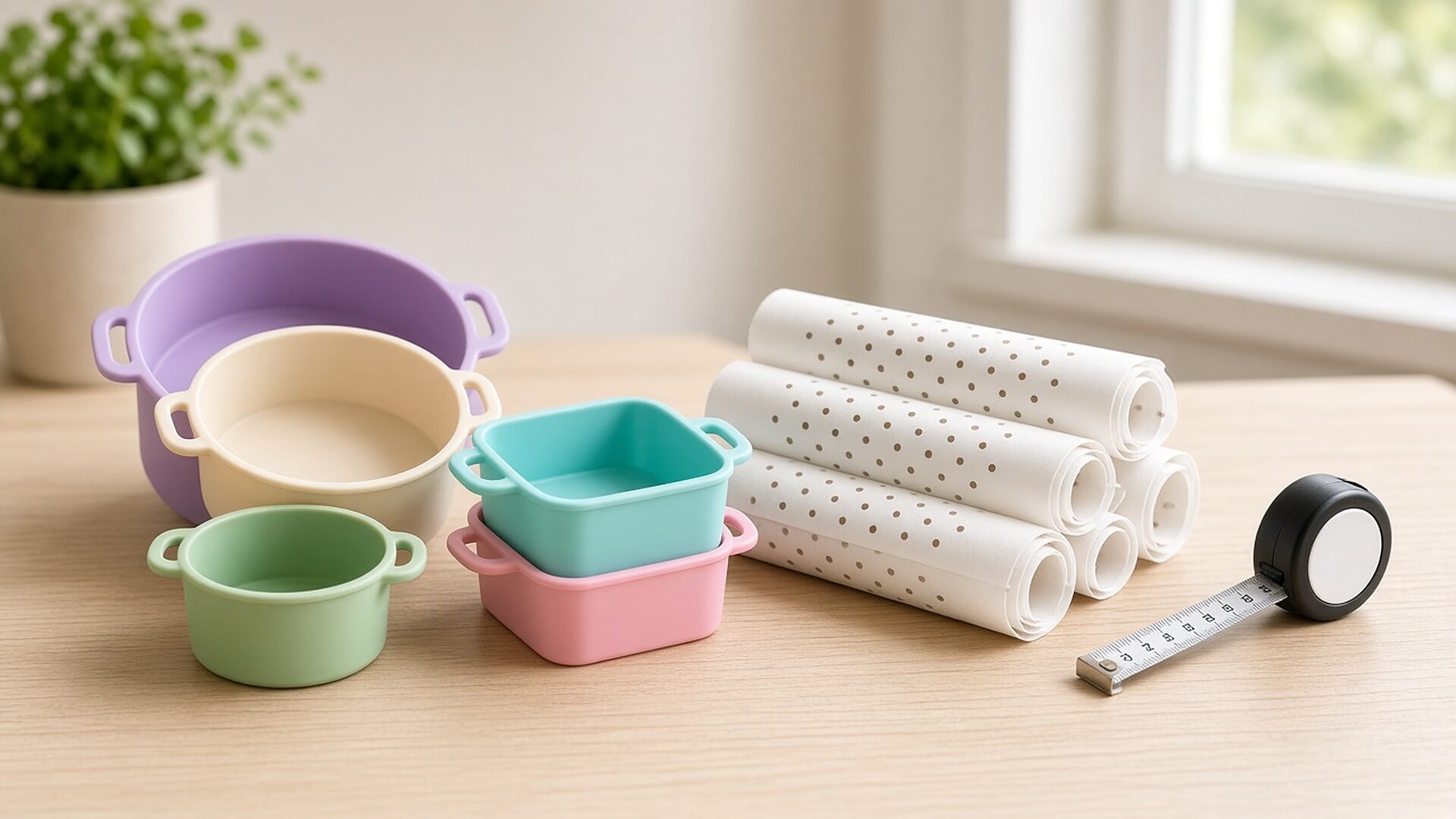
- Round silicone liner: IBILI 20 cm 100% platinum silicone · round · 20 cm (8 in) · dishwasher-safe
The all-rounder for most single-basket air fryers with 4–6 qt. For extra crunch, cook the last few minutes without the liner.
- Square silicone liners for dual baskets: Diboniur 2-pack 2-pack · rectangular · per the manufacturer fits e.g. Ninja Dual Zone AF300EU/AF400EU (7.6–10 L)
If you make two components in parallel on Sunday – e.g. glazed salmon on the left, vegetables on the right.
- Perforated air fryer parchment single-use · 200-pack · round, 17.8 cm (7 in) · unbleached
For vegetables and potatoes when you want them crispy and don't feel like scrubbing.
Care: how to keep your silicone liner in good shape
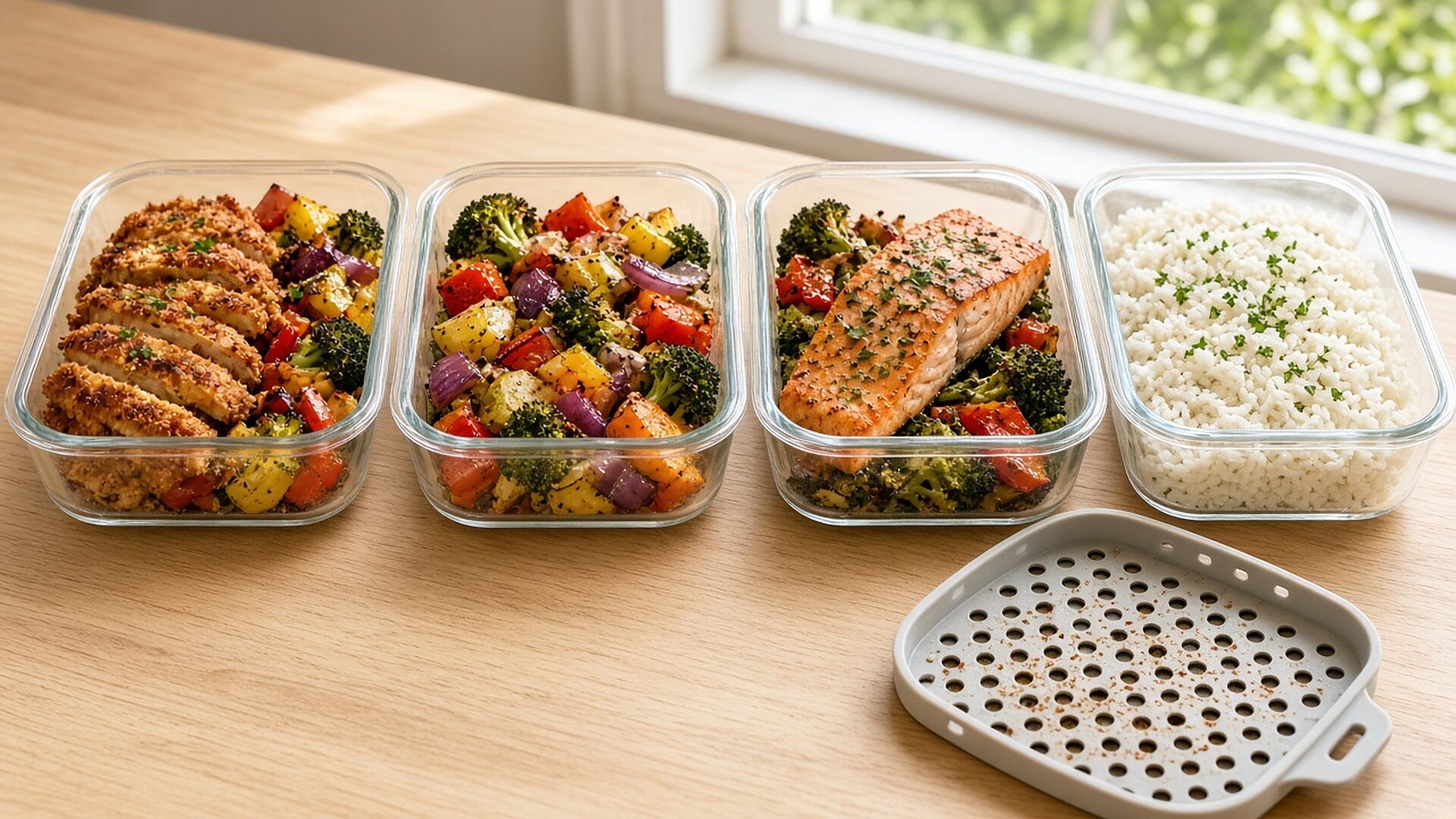
- After cooking, soak briefly in hot water with dish soap – grease comes off much more easily.
- Sticky film? Rub with baking soda and a little water, or put it in the oven empty at 400 °F (200 °C) for 10 minutes.
- Don't use knives or metal spatulas in the liner. A silicone spatula gets out the last bit of sauce too.
- If the liner still smells strongly after months or becomes brittle, replace it.
FAQ
Is a silicone liner better than parchment paper in the air fryer?
It depends. Silicone liners are reusable and great for saucy dishes, eggs and marinades. Perforated parchment lets more hot air through and usually makes vegetables and potatoes crispier.
Does food get crispy in a silicone liner?
Less than directly in the basket. Silicone has a closed bottom, so air only comes from above. Models with ridges or holes help. For extra crunch, cook the last few minutes without the liner.
Can parchment paper go loose in the air fryer?
Never without food on it and never while preheating. Loose paper can get sucked up by the fan and touch the heating element. Always weigh it down and cut it so it doesn't extend past the basket floor.
What size should the silicone liner be?
Measure the inside of your basket and subtract about 1 cm (⅜ in). For 4–5 qt baskets, around 19–20 cm (7.5–8 in) usually fits; for 6–8 qt, more like 21–23 cm (8.5–9 in). Square liners make better use of square baskets.
Are silicone liners dishwasher-safe?
Most are. But a greasy film tends to stick – soak in hot water with dish soap, or rub with baking soda. We'd avoid cheap liners with no food-safety certification (e.g. LFGB or FDA-compliant).
Keep reading
- Sheet pans for meal prep: which one is worth it?
- Air fryer for meal prep: what size do you really need?
- Oil sprayer for meal prep: less fat, crispier vegetables
- Silicone egg bite molds: prep egg bites and omelets
- 5 meal prep containers compared (glass vs. plastic)
Disclosure / affiliate: This article contains affiliate links. As an Amazon Associate we earn from qualifying purchases. The price you pay stays the same. Assessments are based on manufacturer specs and everyday use (as of October 2026).