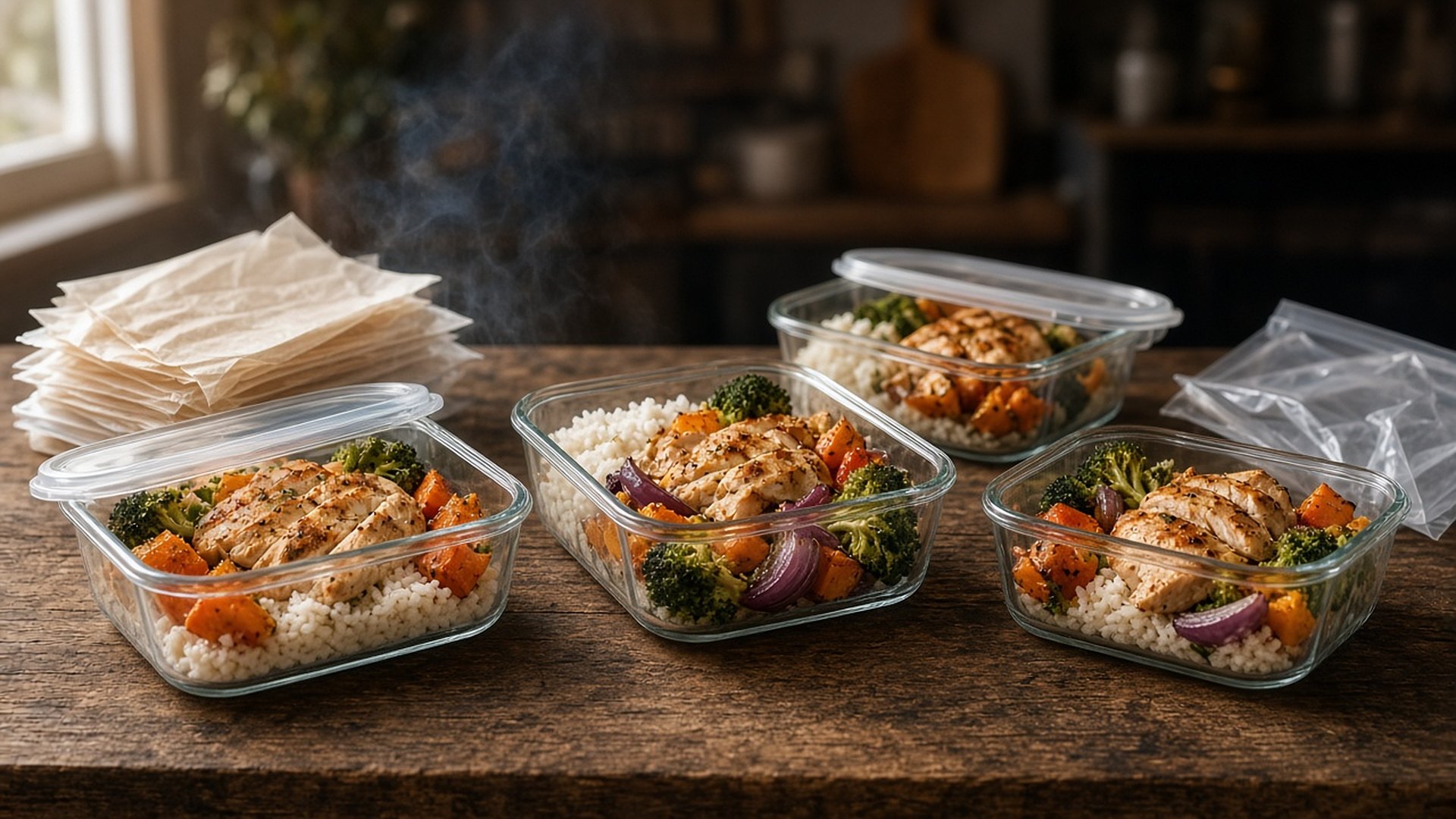
Freezing Meal Prep: Keep Cooked Food Tasting Great for Weeks
What freezes well, how to cool, pack and thaw properly – and which containers survive the freezer.
Disclosure: This article contains affiliate links. If you buy through them, we earn a commission – the price stays the same for you.
In the fridge, cooked food usually keeps three to four days. After that it gets tight – and this is exactly where meal prep often fails. You cook big on Sunday, on Thursday you look skeptically into the container, and on Friday the rest goes in the trash. The freezer solves the problem. You cook a double batch once, eat the first half this week and keep the second for stressful days.
For that to work, a few steps matter: cool properly, pack appropriately, label clearly and thaw gently. Not rocket science – but if you know the steps, you won't be eating something watery and freezer-burned three weeks later.
What freezes well – and what doesn't
| Works well | With limitations | Better not |
|---|---|---|
| Curries, chili, stews, soups | Cooked pasta (better slightly al dente) | Leafy greens, cucumber, radishes |
| Bolognese and other tomato sauces | Potatoes (fine in sauce, often mealy on their own) | Hard-boiled eggs (the whites go rubbery) |
| Rice, quinoa, bulgur | Cream sauces (can separate – stir vigorously) | Yogurt and mayo dressings |
| Chicken, meatballs, lentil patties | Roasted vegetables (get softer, but taste good) | Fried food that should stay crispy |
| Pancakes, muffins, sliced bread | Fresh herbs (only chopped in oil or as cubes) | Raw sliced tomatoes |
Rule of thumb: anything with lots of sauce or liquid freezes beautifully. Anything that lives on crunch doesn't. Combo trick: freeze the base, add fresh toppings like cucumber, salad or yogurt on the day you eat it.
Step by step: how to freeze meal prep properly
1. Cool quickly
Warm food shouldn't sit on the stove for hours. Divide large amounts into several shallow containers so the heat escapes faster, and once the steam is off, get them into the fridge promptly – roughly within two hours. Only when everything is chilled through does it go into the freezer. That prevents bacteria from multiplying in the lukewarm phase and keeps neighboring frozen food from thawing. Speed matters especially with rice.
2. Pack in portions
Freeze in the portions you'll eat later: one container equals one lunch. You have to thaw huge blocks completely – impractical and not ideal for food safety. Leave ½ inch (1–2 cm) of headspace for liquid dishes, because water expands when it freezes.
3. Get the air out
Air is the main cause of freezer burn – the gray, dry patches on meat or rice. With bags, press out the air before sealing. You can freeze soups and sauces flat in a bag: then they stand like books in the freezer, save space and thaw faster.
4. Label
What is it and from when? After two weeks, frozen chili and Bolognese look the same. A piece of masking tape with dish and date is all you need. If you like it neater, use washable freezer labels.
5. Store at 0 °F and keep the order
For best quality, eat most cooked dishes within about two to three months. At a constant 0 °F (−18 °C) they often stay safe longer, but flavor and texture suffer. Put new things in the back, old ones in front – the "first in, first out" principle from restaurant kitchens works in your freezer drawer too.
Thawing and reheating without mush
- Overnight in the fridge: the safest and gentlest method. Move the container from freezer to fridge in the evening, reheat at lunch.
- Straight from the freezer: soups, curries and sauces can be warmed from frozen in a pot over medium heat. Lid on, stir occasionally.
- Microwave: defrost setting first, then full power. Stir in between so no cold spots remain.
- Heat thoroughly: reheated food should be steaming hot throughout – the USDA guideline is 165 °F (74 °C) in the center.
- Don't refreeze: once thawed, it gets eaten. That's why small portions pay off.
A splash of water or broth when reheating rescues rice and pasta that lost some moisture in the freezer. Fresh herbs, lemon or a dollop of yogurt on top make the dish taste freshly cooked again.
Glass, plastic or bags?
Glass containers made of borosilicate glass are handy because they can go straight from the freezer into the microwave or oven (lid off, follow the manufacturer's instructions). Important: don't fill glass to the brim and avoid extreme temperature jumps – so not from freezer straight into a hot oven. Plastic containers are lighter and shatterproof but can stain with tomato sauce. Freezer bags save the most space and are ideal for soups, sauces and ground meat frozen flat. Our glass vs. plastic container comparison goes deeper into materials.
For freezer bags without the throwaway guilt, there are reusable silicone bags. They cost more but last many rounds. And if you freeze a lot, a vacuum sealer can make sense – whether it's worth it is covered in vacuum sealer vs. food storage containers.
Mini plan: cook double, freeze half
Here's what a relaxed rhythm looks like: on Sunday you cook a chili and a pot of rice in double quantity. Monday to Wednesday you eat fresh from the fridge; the other half goes straight into the freezer in portions once cooled. Next week you cook a double curry – and then you already have two different dishes in stock. After three or four weeks, your freezer is a small menu. How the cooking day itself works is in the Sunday prep checklist.
Our picks
We link to Amazon search results instead of individual products – that way you see current prices, sizes and reviews and choose for yourself. Prices and availability may change.
- Freezer-safe glass containers borosilicate glass with snap lid
From freezer to microwave (lid off). Ideal for curries, rice and oven dishes.
- Zipper freezer bags resealable, 1–3 liters (quart to gallon)
Frozen flat, soups and sauces save lots of space and thaw faster.
- Freezer labels washable or residue-free
So you still know after three weeks whether it's chili or Bolognese.
FAQ
How long can I freeze meal prep?
For best quality, about two to three months at 0 °F (−18 °C). After that it's usually not unsafe, but flavor and texture decline.
Can I freeze cooked rice?
Yes, rice freezes well. The key is to cool it quickly after cooking and freeze it promptly. When reheating, add a splash of water and heat it until piping hot.
Can warm food go straight into the freezer?
Better not. Let it steam off briefly, chill it through in the fridge, then freeze. That way the rest of your frozen food doesn't start to thaw.
What's the best way to thaw meal prep?
Overnight in the fridge. Soups and sauces can also be heated straight from frozen in a pot.
Can I freeze glass containers?
Yes, if they're labeled freezer-safe. Don't fill to the brim and avoid big temperature jumps.
Keep reading
- Crockpot meal prep: 9 slow cooker recipes to freeze
- Vacuum sealer vs. food storage containers
- Budget meal prep: under $30 a week
- 5 meal prep containers compared (glass vs. plastic)
Disclosure / affiliate: This article contains affiliate links. As an Amazon Associate we earn from qualifying purchases. The price you pay stays the same. Assessments are based on manufacturer specs and everyday use (as of October 2026).